PSI homeowner guide / Vancouver & Lower Mainland
What is your attic upgrade worth?
Insulation rebates. Heating savings. A better quote.
Before you buy attic insulation, understand what you can get back, what changes your energy use and what the contractor needs to check.
1 / What can you get back?
Use the added R-value. Then apply the cap.
R-value measures resistance to heat flow. If the existing insulation is assessed at R20 and the proposed finished level is R50, the addition is R30. Ask for the starting and finished values separately; adding R30 and finishing at R30 mean different things.
For the standard utility attic offer, the starting calculation is $0.02 × eligible attic square feet × R-value added, capped at $900. The minimum addition is R12. If old insulation is removed, the starting value is not automatically zero: the program accounts for the previous insulation. Rebates cannot exceed the eligible paid cost. FortisBC calculation and requirements ↗
| Eligible area | R-value added | Calculation | Attic rebate before other limits |
|---|---|---|---|
| 800 sq ft | R20 | $0.02 × 800 × 20 | $320 |
| 1,200 sq ft | R30 | $0.02 × 1,200 × 30 | $720 |
| 1,500 sq ft | R40 | $1,200 calculated | $900 cap |
Use the attic’s qualifying insulated area, not the total floor area advertised in a real-estate listing. A two-storey house does not necessarily have an attic as large as both floors combined. Ask for the measured area, the documented existing insulation and the proposed increase on the quote. Those three numbers make the rebate estimate reviewable.
A larger rebate is only one part of value. Buying unnecessary work to reach a maximum is not a saving. Compare the proposed improvement with the actual condition of your attic and the total amount you would pay.
Could you qualify for more help?
FortisBC’s separate income-qualified rebate
The current attic rate is $0.05 × square feet × R-value added, up to $2,000, with at least R12 added. For example, an eligible 1,200-square-foot attic gaining R30 calculates to $1,800 before cost limits. This is a different offer from the standard table above.
For a Lower Mainland natural-gas customer, check household income, the FortisBC account and home restrictions. The home must be at least 10 years old, no larger than 3,500 square feet, and assessed below $1.2 million. Registered owners must be on the account and own only one B.C. property. A four-person household’s published income ceiling is $94,900; other household sizes have different limits. Applications are due within six months of the invoice. This offer cannot be combined with other FortisBC, provincial or federal rebate programs. Full FortisBC income-qualified requirements ↗
ECAP: assistance rather than a cash-back quote
The Energy Conservation Assistance Program may provide an evaluation and approved insulation, weatherization or other upgrades at no cost for eligible households. Apply through the program first. Its evaluation determines which upgrades, if any, are suitable, and the program arranges delivery. Funding and eligibility limits apply. BC Hydro and FortisBC assistance-program details ↗
This is not a promise that a separately commissioned PSI installation will be reimbursed. If assistance is your preferred route, get the program’s decision before buying work privately.
Important 2026 change: CleanBC’s income-qualified insulation offer ended.
CleanBC’s Energy Savings Program removed insulation rebates effective July 6, 2026. Its limited July grace period concerned qualifying work already arranged under the earlier rules; it is not an offer for a new October project. The program’s own update directs affected customers to the Home Renovation Rebate route. Read the CleanBC insulation-change FAQ (PDF) ↗
Do not add an old income-qualified insulation amount to a current utility rebate. If you already have an application or eligibility code, ask the administrator which rules govern that specific file before changing your plans.
2 / Check the route before booking
Your heating system matters more than your postal code.
For BC Hydro’s route, the home must meet its electric-heating, utility-account and property requirements. Municipal electricity customers in its territory, including New Westminster, can be included. Natural-gas-heated homes should check the FortisBC route instead. Eligible existing homes and individual accounts are treated differently from condominium buildings, strata accounts, outbuildings and new construction. BC Hydro’s full eligibility checklist ↗
The insulation offer requires an HPCN member contractor; do-it-yourself installation is not eligible. BC Hydro lists eligible material types and installation conditions, including the treatment of removed insulation, pest issues and certain permit-driven renovations. Its application deadline is six months from the invoice date. Installation and application requirements ↗
Before accepting a rebate-based quote, verify the installing business’s current insulation listing in the Home Performance Contractor Network directory and confirm the applicable program. This guide does not certify PSI’s network status or approve your application. Ask PSI to establish both the project scope and the rebate route before work is authorized.
3 / Specify what goes into the attic
“Spray-in” can mean different things.
Homeowners often use “spray-in” for any insulation delivered through a hose. Blown-in loose-fill insulation and spray polyurethane foam are different systems. NRCan describes loose-fill options including cellulose, glass fibre and mineral fibre. Loose-fill can suit accessible attic top-ups; the product’s coverage, thickness and installation requirements still matter. NRCan’s insulation-material guide ↗
Start the PSI conversation with the problem: a cold upper floor, uneven coverage, a proposed top-up or a roof-space renovation. Ask which material is proposed, where the insulated boundary will be and why that approach suits your building. A brand name or a high R-value on its own does not explain the complete scope.
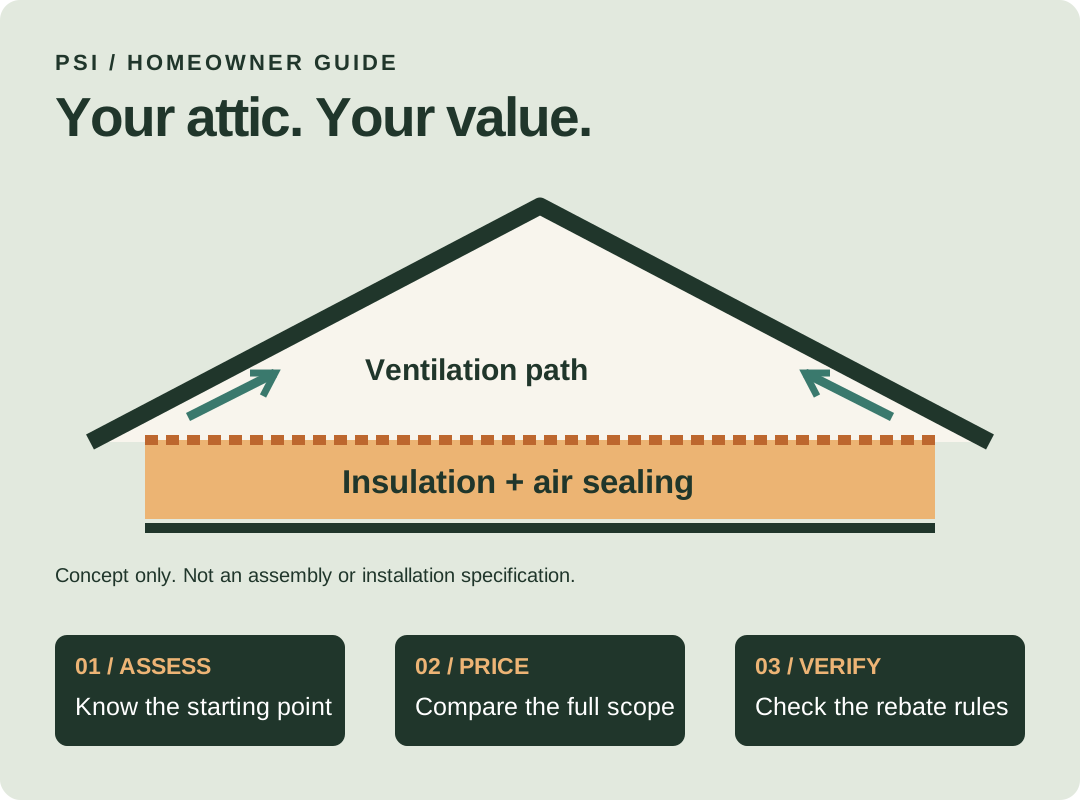
NRCan’s attic guidance treats air sealing, insulation and ventilation together. In a vented attic, adding insulation must not block the intended ventilation at the eaves. Moisture, roof defects and unsafe existing conditions need attention before they are covered. An attic-floor top-up and insulation beneath roof sheathing require different design decisions. NRCan’s roofs-and-attics guide ↗
Ask who is checking the hatch, penetrations, ventilation path and existing material, and which preparatory work is included. Where an existing material or condition needs specialist investigation, agree that next step before installation. This article is a buying guide; the illustration does not specify clearances, thicknesses or a roof assembly.
4 / What is the value to you?
Separate the rebate from the ongoing savings.
A rebate reduces your initial outlay. Reduced heating demand can affect future running costs. Comfort is another outcome to discuss, especially if upper rooms feel different from the rest of the home. Those benefits are related, but they should not be combined into an unsupported “pays for itself” promise.
No savings percentage is assigned to your home here. A lightly insulated, leaky attic is a different starting point from one already well insulated. Heating equipment, air leakage, thermostat settings, weather and occupancy also matter. A review of bills and a home-specific energy assessment can give the discussion a firmer basis than a generic percentage.
A transparent budget example
Assume an all-in project cost of $2,400 and an approved $720 rebate: the net initial cost would be $1,680. These are invented planning figures, not PSI pricing. Until approval, budget for the full amount and confirm when and how any rebate would be paid.
Now assume the home spends $1,800 a year specifically on space heating. The table changes only the assumed reduction in that cost. It demonstrates the arithmetic; it does not predict which outcome this home, or yours, will achieve.
| Assumed heating-cost reduction | Annual saving | Simple payback |
|---|---|---|
| 5% | $90 | 18.7 years |
| 10% | $180 | 9.3 years |
| 15% | $270 | 6.2 years |
Simple payback equals net cost divided by annual saving. It excludes financing, energy-price changes, maintenance and the value you place on comfort. Do not apply a heating percentage to a whole electricity bill that also includes appliances, hot water or vehicle charging. Fixed utility charges may remain.
For a useful comparison, ask each bidder to price the same area, preparation and target insulation level. Keep optional removal, repairs and access work visible as separate items. A lower headline price can represent a smaller scope; a larger rebate estimate can reflect a different assumption about the starting R-value.
Are there extra rebates for a bigger renovation?
BC Hydro lists a $300 Two Upgrade Bonus and a separate $750–$2,000 Home Energy Improvement Bonus for qualifying projects under its standard renovation route. The bonuses cannot be combined. Attic work counts toward bonus eligibility only when its rebate reaches at least $500. The larger bonus requires pre- and post-upgrade EnerGuide evaluations and at least three qualifying upgrades. Check the sequence and deadlines before starting. Current bonus rules ↗
These are whole-project offers, not extra money automatically attached to a single attic top-up. Ask the program to confirm how your proposed package qualifies. Keep each rebate, each upgrade cost and any assessment fees separate in the budget.
5 / Make the first conversation useful
Bring PSI your attic. Get a clear scope.
For a Vancouver or Lower Mainland enquiry, start with the city, home type, heating fuel, approximate attic area, access and the issue you want to solve. This can be a Vancouver house, a Burnaby or Richmond retrofit, a Surrey or Langley top-up, or a Fraser Valley enquiry from Abbotsford or Mission. PSI confirms availability and whether the proposed work is suitable.
- Ask for the product, existing R-value, R-value to be added and qualifying area.
- Identify air sealing, ventilation provisions, hatch work and any preparation or removal separately.
- Request an itemized total, taxes, exclusions, schedule and payment terms.
- Confirm the installing contractor’s rebate eligibility and who prepares the supporting invoice.
- Keep the quoted rebate conditional until the program confirms it; keep records for the application.
Send photographs you can obtain safely; do not enter an unfamiliar attic to collect them. Keep your private address and utility documents in the direct contractor or program conversation. You can read this complete guide without supplying contact details.
See PSI’s full profile, credited work gallery and project records ↗
Attic rebate questions, answered.
How much is the attic insulation rebate?
The standard utility attic offer has a $900 maximum. A separate FortisBC income-qualified offer has a $2,000 attic maximum. ECAP may provide approved insulation upgrades at no cost through its own process. Eligibility and program rules determine the route; these are not amounts to add together.
Is blown-in insulation the same as spray foam?
No. Blown-in loose-fill and spray polyurethane foam are different materials and installation approaches. Ask for the proposed product and assembly in writing; a hose at the worksite does not identify the material.
Can I get the rebate if I install the insulation myself?
The utility offer requires installation by a Home Performance Contractor Network member. A self-installed upgrade does not qualify for this offer. Check the current contractor listing and the full program terms before booking.
How much will I save on my heating bill?
This guide does not assign a savings percentage to your home. Starting insulation, air leakage, heating equipment, weather and household use affect the result. Use a home-specific assessment and distinguish heating costs from the whole utility bill.
Does living in Vancouver automatically qualify me?
No. Heating fuel, utility account, property type, installation and documentation requirements still apply. Vancouver and Lower Mainland locations are the enquiry area for this guide, not an eligibility approval.
Who do I contact about a PSI attic project?
Contact Performance Spray Insulation at 778-779-4353 or insulatevancouver@gmail.com. Ask PSI to confirm current availability, the proposed attic system and contractor eligibility for the rebate you intend to use.
Official sources and review date
Checked October 23, 2026. Offers and eligibility can change. The linked program documents govern an application; this PSI guide is independent editorial information, not a utility approval or a promised rebate.
- BC Hydro: insulation offer ↗
- FortisBC: insulation offer ↗
- BC Hydro: home and account eligibility ↗
- BC Hydro: bonus offers ↗
- CleanBC: 2026 insulation changes FAQ (PDF) ↗
- NRCan: insulation materials ↗
- NRCan: roofs and attics ↗
- HPCN: contractor directory ↗
- FortisBC: income-qualified insulation offer ↗
- BC Hydro and FortisBC: Energy Conservation Assistance Program ↗